Our products aims to
simplify & clarify
the complex trade dynamics that
affect a business’s risk
Publications

NEWS

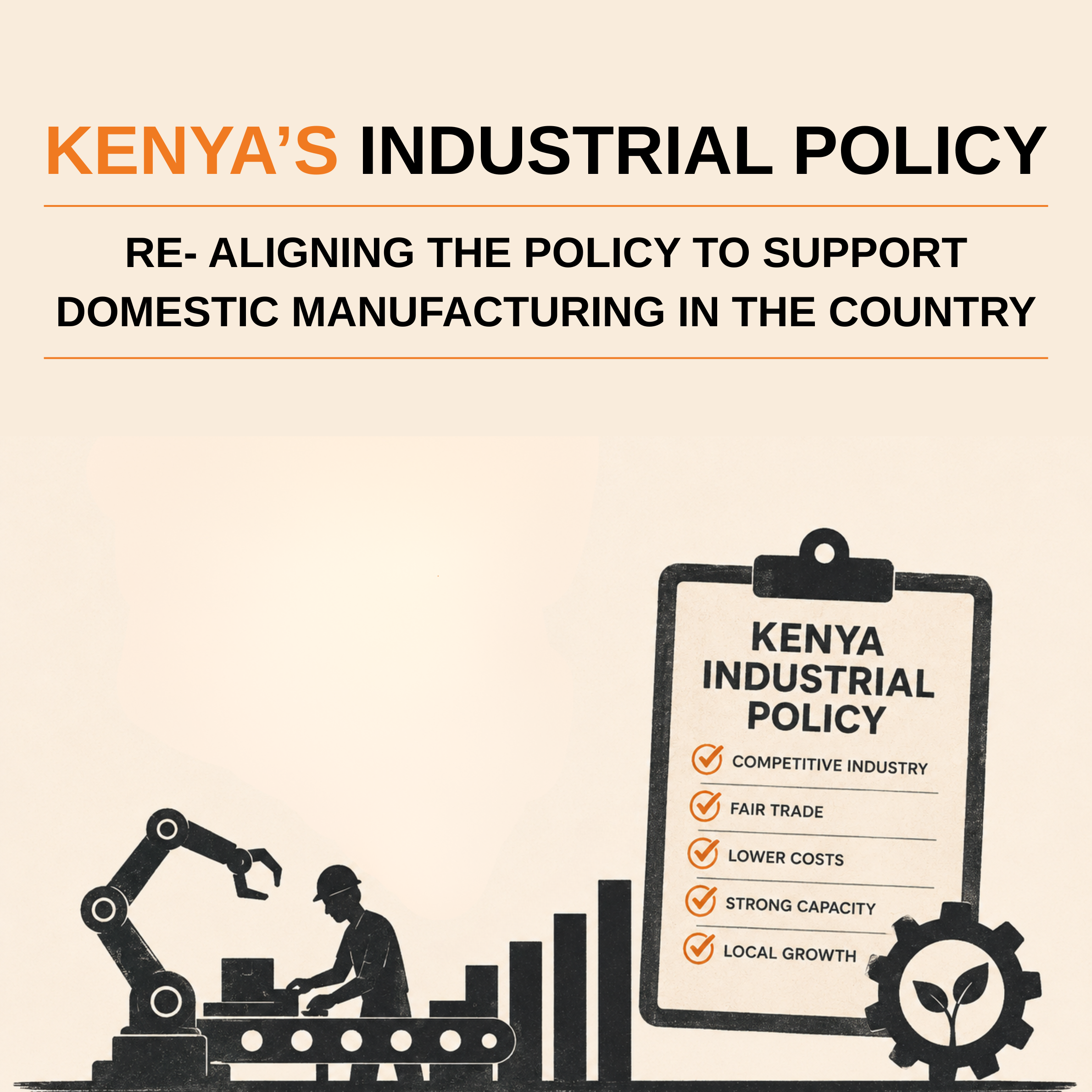
Kenya’s Industrial Policy: Re- aligning the policy to support domestic manufacturing in the country

Safeguard protection is granted whenever an industry is suffering from serious financial injury, caused by an increase in imports, which was because of unforeseen developments stemming out of the 1994 GATT negotiations, to which South Africa was a signatory.

Safeguard measures are enacted to ensure enough breathing room for the domestic manufacturing industry in distress to adjust and become more competitive, usually within a period of 3-6 years.

For this remedial protection to be effective, these safeguard duties need to be monitored and enforced across the board. However, as part of the Safeguard Agreement, the Safeguard Regulations creates an “Exempted Countries” list. This exemption has shown to provide a safeguard duty-free roue for imports from countries which are developing in nature and from where imports did not originate prior to the imposition of the safeguard duties.

The” circumvention” becomes a problem when the bigger importers switch their sources from imports from the traditional exporting countries like China and Russia, to smaller, developing nations, like Taiwan and Indonesia, effectively bypassing the Safeguard duties in their entirety.
Other WTO member countries would normally act quickly against these changes by removing these “developing nations” quickly once its import volume exceeds the established threshold. No further investigation is required.

In South Africa, the remedial action linked to the imposition of safeguard measures are failing because the officer in charge of this administrative action, the Minister of Trade, Industry and Competition, Minister Dave Patel, fails in his duty to authorise these exempted country removals immediately, or at all in some cases. Imports that reduced because of the imposition of the safeguard duties, with a resultant uptick in local production, regained lost ground within a year of the duties being imposed, rendering the safeguard protection completely impotent.

Below is an import chart, providing insight on how imports of Hexagon Nuts, a product protected by safeguard duties have climbed to almost pre-safeguard levels, because of a lack of action by the government to curb imports from developing nations.

In the current global economy, industrialisation remains one of the best strategies in advancing economic development, diversifying export opportunities, providing employment to citizens and ensuring long-term prosperity of any nation. Kenya is still a developing country in the process of advancing its level of economic development through industrulization. According to the 2025 Africa’s Industrialisation Index by the African Development Bank, Kenya ranks 8th on the continent.

The manufacturing sector, which is a significant contributor to the level of industrialisation, only accounts for 7.2% of the GDP of the economy. This low number is perhaps attributable to the existence of a challenging business environment, as highlighted in the survey by the members of the Kenya Manufacturers Association (KAM). The challenging business environment is exhibited by low consumer demand, the lack of a level playing field, illicit trade and the high cost of doing business attributable to the level of taxation.

One of the important tools that can come to the aid of Kenya’s situation is its current Industrialisation Policy. Although the policy is valid from 2012 to 2030, this article proposes its review in the mid-term to accelerate the progress of the nation towards becoming an industrialised economy. The following recommendations are proposed to address the challenges raised by industry: -

Challenge:
Lack of a level playing field: The domestic industry struggles under the weight of imports

Recommendation:
Kenya already has in place the Kenya Trade Remedies Act with an established Kenya Trade Remedies Agency. With this established framework in place, the industry in collaboration with the agency has the power to institute anti-dumping, countervailing or safeguard proceeding. The duties imposed will level the playing field between imports and domestic goods.

Challenge:
Illicit trade in the form of smuggling of goods across borders, underinvoicing to reduce the tax liability, counterfeit goods as well as transhipment fraud.

Recommendation:
Enforcement of its customs management regime. This should be done in collaboration with other countries that share a border with Kenya. In doing this, Kenya should prioritise sectors that are most affected by illicit trade, which include; the cement, steel and beverages industries.

Challenge:
High cost of doing business attributal to operating costs and the level of taxation.

Recommendation:
Kenya needs to lower the structural costs of local manufacturers. This can be done through, for example increasing its investment or sourcing for foreign direct invstement in reliable and lower-cost renewable energy sources such as geothermal, wind and solar.
Prefferential tax regimes should also be put in place to support the micro small, medium enterprises to foster their growth and development.

Challenge:
Low level of operating capacity

Recommendation:
This can be addressed through stimulating domestic demand for locally manufactured goods. Although Kenya already has the “Buy Kenya Build Kenya” strategy, this is not sufficient to support local manufacturing.
Kenya needs to take advantage of the Local Content Bill to priotise locally manufactured goods in government procurement. This is particulary feasible seeing that Kenya is not a party to the WTO Government Procurement Agreement.

-Annabel Nanjira

footer logo
We study the markets, trends, and emerging best practices, in various steel related industries and cover Trade Development and Operational Excellence to unlock the present and future value for our customers.
Give us a Call
Copyright © 2025. All Rights Reserved. Commodity Trade Observer. Designed and Developed by ThinkTank Creative. Privacy Policy.